


Petra Jordan
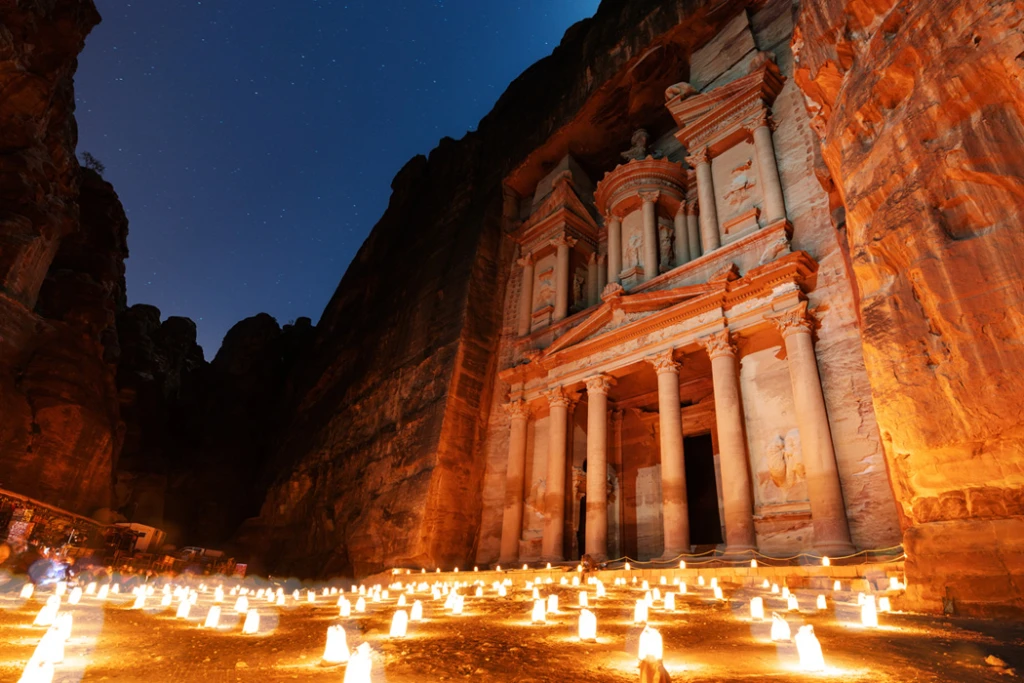
Petra: The Mysterious Ancient City of Jordan Jordan is a Middle Eastern country rich in many historical and natural beauties. One of the most significant of these historical treasures is Petra, located in the south of the country, on the Nuzeyb Valley. As an ancient city, Petra continues to enchant its visitors with both its architecture and history. Listed as a UNESCO World Heritage Site, Petra is also considered one of the New Seven Wonders of the World. The history of Petra dates back to the 4th century BC. At that time, it was built as the center of the Nabataean Kingdom by Arabs. The Nabataean people took advantage of its location on rich trade routes and turned the region into an important center for trade and cultural interaction. Over time, Petra's ruins began to lose their significance due to the fall of the Roman Empire and various natural disasters. However, its rediscovery in 1812 by Swiss explorer Johann Ludwig Burckhardt brought Petra back into the spotlight. Petra is noted for its architectural structures, rock-cut tombs, and water systems. One of the city's most striking structures, the Treasury (Al-Khazneh), is one of Petra's symbols. With its dazzling architecture, the Treasury captivates with its detailed carvings and decorations carved into the rocks. The purpose of this structure in ancient times is still a topic of debate. Some historians suggest it was a tomb, while others consider it a temple or a treasure repository. For those wishing to visit Petra, various walking paths and exploration opportunities are available. At the entrance of the city, while advancing among the magnificent rocks, visitors encounter captivating views. Passing through the narrow canyon called Siq, the gateway to Petra, creates one of the most exciting moments for visitors. Encountering the Treasury at the end of the canyon draws thousands of tourists every year. Not only is Petra's architecture mesmerizing, but its historical and cultural significance is also quite captivating. This city, once home to various civilizations, has been a melting pot of many beliefs and lifestyles. Although it was used by ancient Romans, Byzantines, and various Arab civilizations, the Nabataean culture has left the most distinct traces in the city. The city has served as a convergence point for the beliefs and lives of communities that existed in different periods. The experiences of visitors in Petra are essential not only for their memories but also for understanding ancient history and culture. With its historical texture and unique architecture, Petra reminds us of many values that modern times have lost. This unique place, combined with its natural beauties, offers unforgettable moments to visitors. The extraordinary landscapes of Jordan and the magic of Petra attract a significant number of tourists each year. The best time to visit Petra is during the spring and autumn months. During this period, the temperatures are more suitable, and walking becomes more enjoyable. Additionally, at sunset, Petra's splendor gains another beauty. The sunlight hitting the rocks, combined with the region's magnificent color tones, offers extraordinary views to visitors. Petra in Jordan is more than just a historical site; it is like a window that provides people with the opportunity to delve into the depths of the past. This city, carrying the traces of ancient civilizations, holds great significance for both the local population and the entire world. Cultural events and festivals held at certain times further emphasize the region's historical and cultural richness. In conclusion, Petra is not just an ancient city but a laboratory for contemplating humanity's journey through history, intercultural interaction, and the evolution of civilizations. This unique corner of Jordan stands out as a must-visit place for history enthusiasts, nature lovers, and explorers. Experiencing the magic of Petra offers an unforgettable experience for anyone wishing to bridge the past and the present.